
Congrats on your new beautiful natural stone countertop! This blog explains how to take care of your natural stone countertops to help them look their best for years to come. Follow along as we share some care & maintenance tips on the four of the most commonly used natural stone countertop materials.
What to Know About Quartzite

Super White Quartzite countertops & full-height backsplash
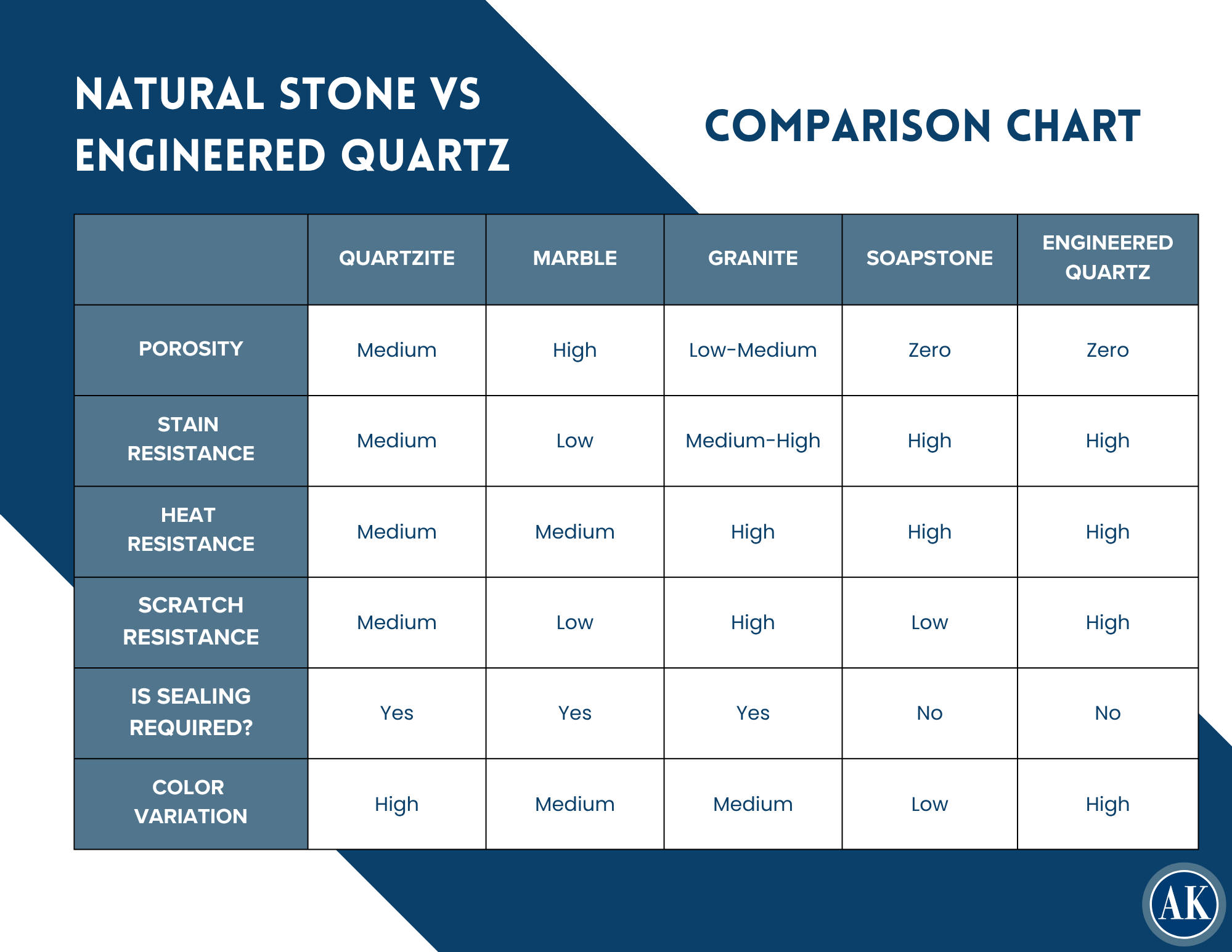
Quartzite is one of the strongest and most durable natural stones, so this is a great choice for a kitchen! Quartzite can resemble the look of marble, but is not as soft & porous as marble. We definitely recommend quartzite over marble for kitchens. There are many varieties of veining & tonality for quartzite, so your countertops will be very unique if you go with this material! However, it’s important to know that you must pick out your slab(s) in person at a stone yard, which can take multiple trips and a lot of time. This material can be pricey depending on the color selection.
Understanding Marble in Kitchens

Carrara marble countertops
Marble is soft & porous, meaning it’s not a matter of if it will scratch, etch, & stain, it’s when it will. If you love to cook and use your kitchen and not just stare at it, we definitely do not recommend using this material. However, there’s no denying that it is gorgeous! Carrera marble tends to have smaller slab sizes, meaning more seams in your kitchen layout. Marble can get very expensive depending on the exact type you use for your project. Also, this material requires trips to stone yards, just like the quartzite point mentioned above.
Some Information on Granite
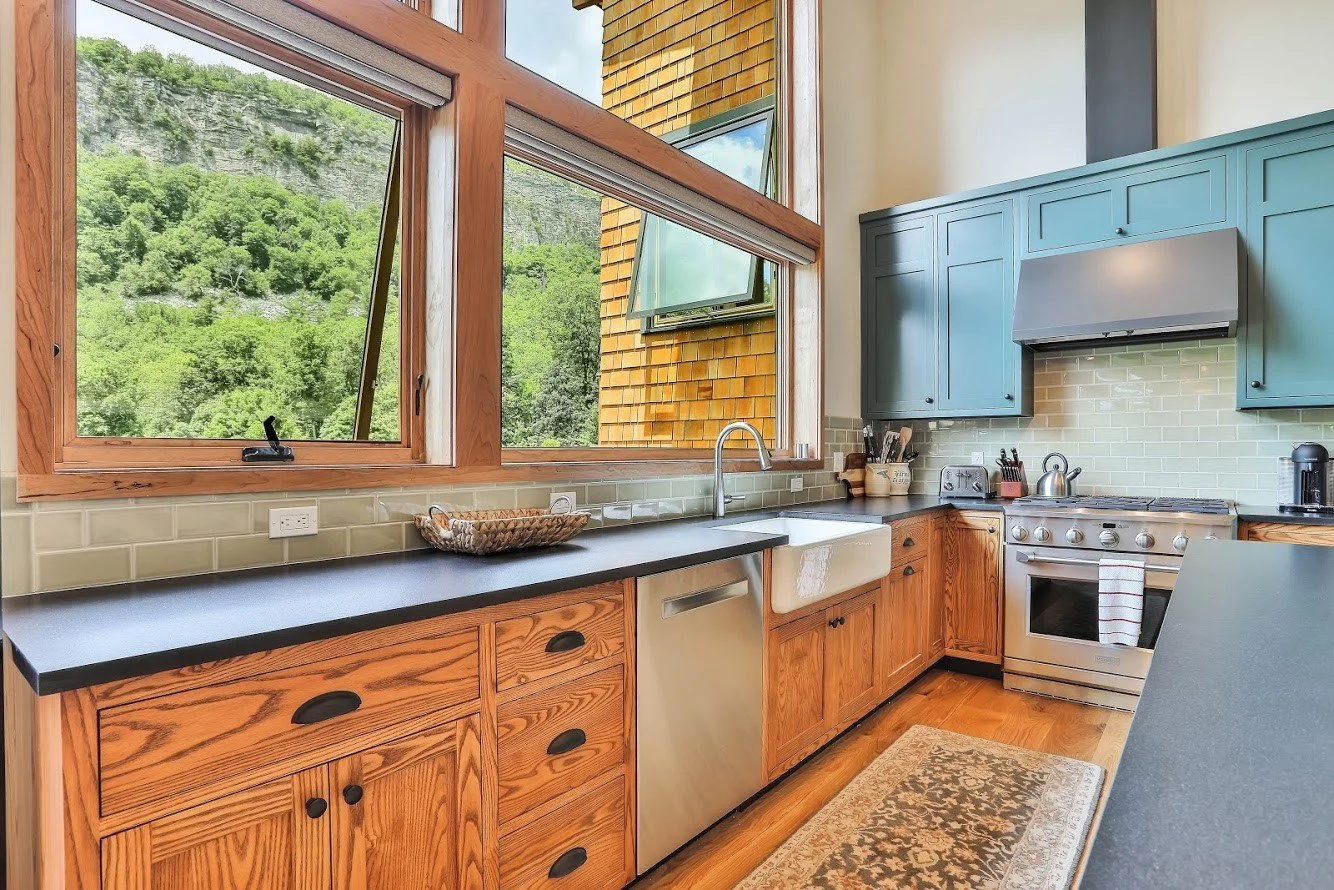
Absolute Black Granite countertops
Granite is strong & durable, even more so than quartzite, and this material is typically more cost effective than quartzite or marble (depending on your selection). Something to note is that the lighter the granite, the more porous it is. Most granite slabs are a dark color & busy pattern, so if you are looking for a light top with subtle veining, granite probably will not work for you.
Quartzite, Marble, & Granite Care & Maintenance
Everyday cleaning: Use mild dish soap, warm water, and a microfiber cloth for daily cleaning. A soft cloth or sponge with mild soap and water is usually all you need. Avoid abrasive pads or harsh cleaners, as they can scratch, dull, or damage the stone’s natural finish.
Use natural stone-safe products: Many everyday cleaners can be too harsh for natural stone. Choosing a cleaner specifically formulated for quartzite helps protect the surface, maintain its shine, and provide the proper care needed for long-term durability.
Recommended cleaner: Rock Doctor Quartz & Granite Cleaner
Note about spills: Always clean up any spills as soon as possible with mild soap, water, and a microfiber towel, especially anything acidic such as wine or lemon juice. Turmeric is something that should be cleaned immediately as well to avoid stains.
Sealing your countertops: Sealing is required every 6 months-1 year to try to prevent staining. Some recommended sealers are Miracle 511 Impregnator Penetrating Sealer or Rain Stop
Prevent scratches and heat damage: Cutting directly on the stone or placing hot pans on the surface can wear down the sealant and finish over time. Using cutting boards and trivets is an easy way to protect your investment and avoid unnecessary repairs.
What About Soapstone?
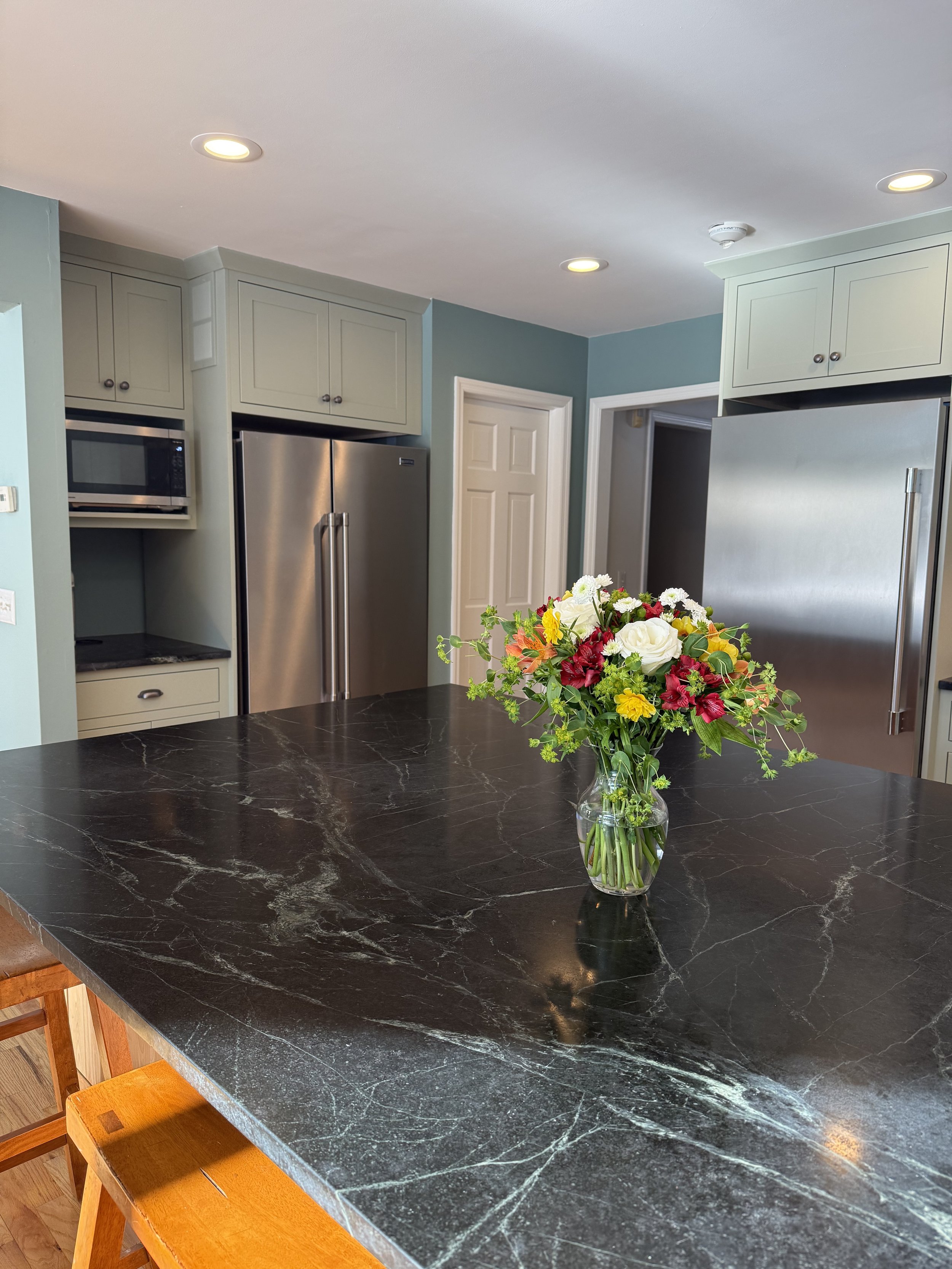
Black Soapstone Honed
Soapstone, although a natural stone, is naturally non-porous and does not need to be sealed. However, this stone is softer than granite, marble or quartzite, making it more prone to scratching. It is possible to buff out the scratches. Also, it is both stain & heat resistant, which makes it a great material option for kitchens. One aesthetic thing to note is that soapstone tends to range from a medium gray to charcoal to black, so if you’re looking for a light toned countertop, soapstone probably won’t work for you.
Soapstone Care & Maintenance
Oiling process: Oiling is required to keep an even appearance & speed up the natural aging process (develop a patina). It is recommended to reapply oil to your soapstone once the last previous coat starts to fade. Over time, the oil will no longer fade, roughly around 8 months - 1 year. *BE SURE YOU ARE USING A FOOD GRADE MINERAL OIL*
Everyday cleaning: Use mild dish soap, warm water, and a microfiber cloth for daily cleaning. A soft cloth or sponge with mild soap and water is usually all you need. Avoid abrasive pads or harsh cleaners, as they can scratch, dull, or damage the stone’s natural finish.
Prevent scratches and heat damage: Cutting directly on the stone or placing hot pans on the surface can wear down the sealant and finish over time. Using cutting boards and trivets is an easy way to protect your investment and avoid unnecessary repairs.
To Wrap it Up
Natural stone is a beautiful material to have in your home, and as long as you take good care of it, it should stay beautiful for many years. If you ever have questions regarding the care & maintenance please don’t hesitate to contact us! Below is a chart to help understand the difference in countertop materials.