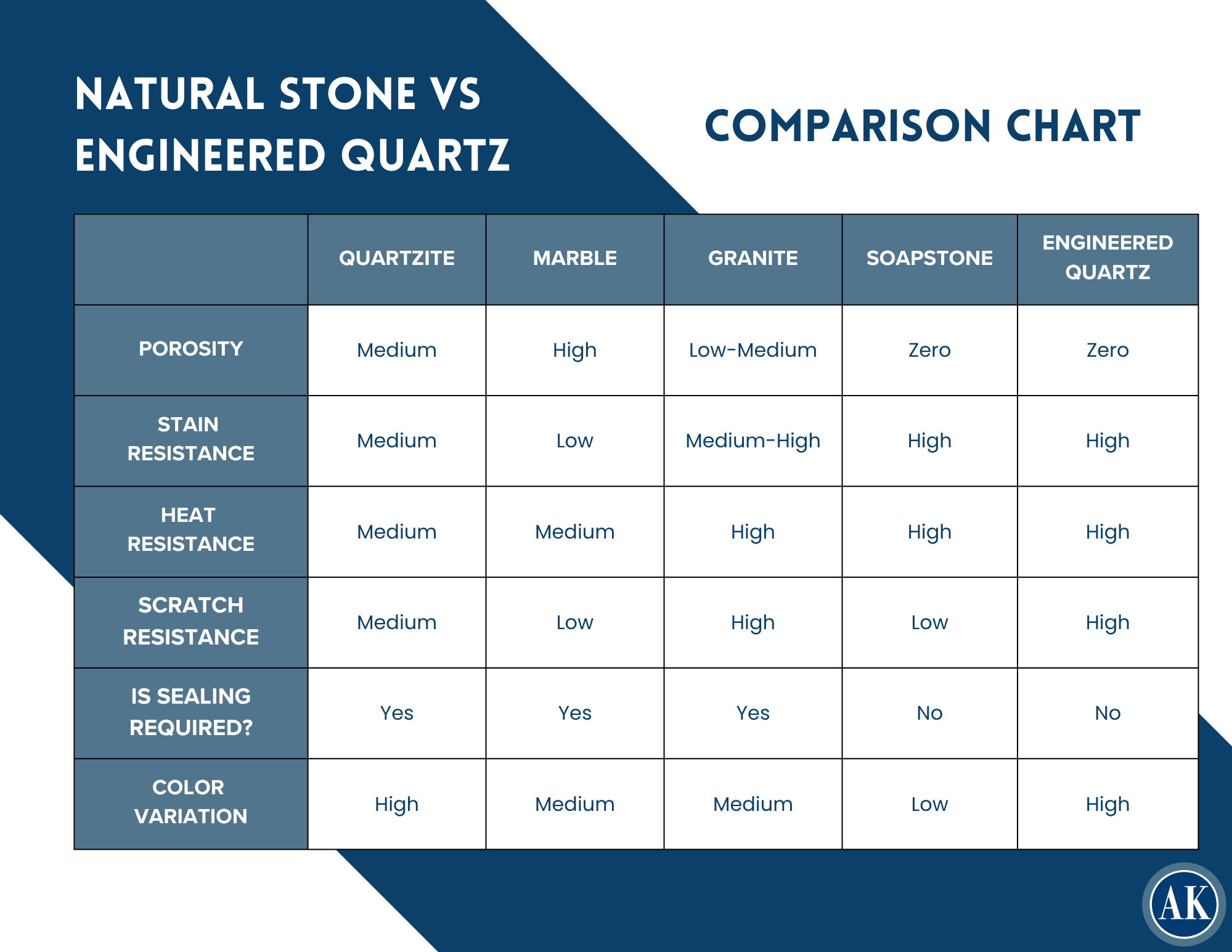
Natural stone, especially quartzite, is really having its moment in kitchens! If you are in the research stage of your kitchen renovation, I’m sure you’ve seen Taj Mahal quartzite everywhere. It’s a gorgeous stone with warm tones, so it’s not surprising that everyone loves it! This material requires a few more steps and consideration than engineered quartz, which not everyone realizes when they are seeking out natural stone countertops. Follow along as we explain the differences between natural stone and engineered quartz countertops.
How Natural Stone Differs from Engineered Quartz

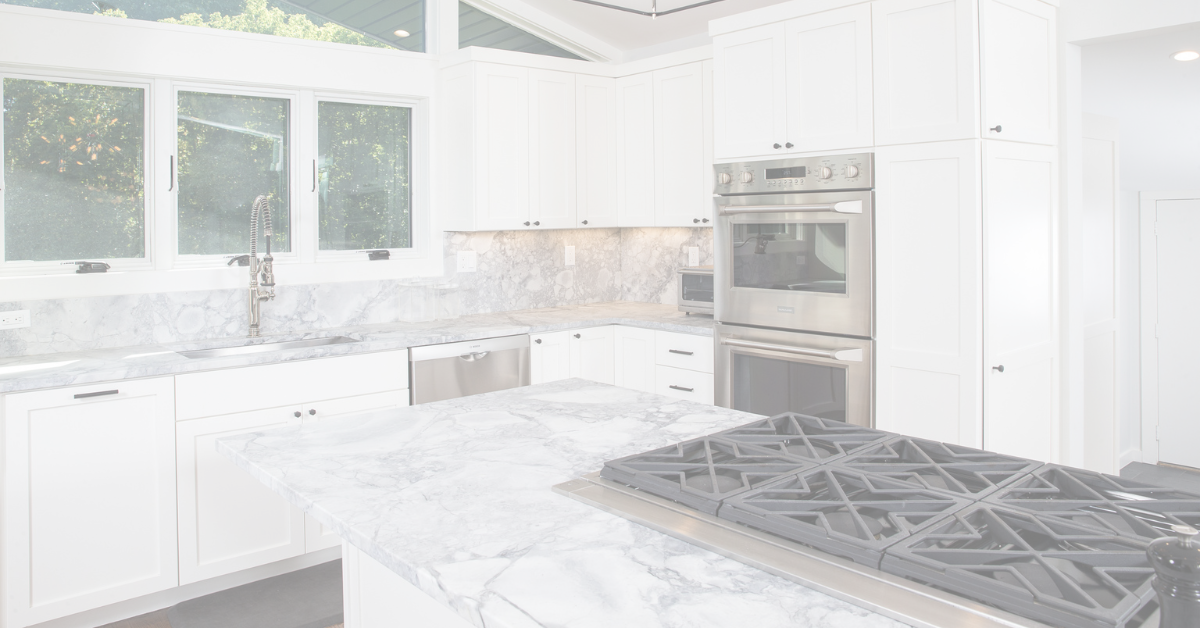
Esmeralda Quartzite island countertop with MSI Soapstone Metropolis Polished perimeter countertops
Natural stone generally requires more maintenance, time, and money (depending on the exact material selection) than engineered quartz. Some things to note about going with natural stone over an engineered option:
The beauty of natural stone is that it is a living surface that will age and show signs of use. This creates an “old world” feel and adds charm and character to your home. However, those signs of use are stains, scratches, etches, chips, etc. If you are someone who wants their countertop to look exactly the same as the day it was installed for many years, then natural stone will not work for your lifestyle.
Plan to take multiple trips to multiple stone yards to look at slab options. These locations are not necessarily close, and often have limited weekend hours & require appointments. Your kitchen designer can give you a list of available stone yards that we work with.
*NOTE ABOUT SLAB VIEWING: We know it’s easy to get distracted by the beauty of the slabs! It’s important to remember to have a keen eye when looking at slabs. Be sure to focus on the small details, specifically make sure you are looking for any cracks/imperfections towards the center of the slab. These imperfections will be part of your countertop, so make sure every part of the slab is something you can live with for many years! If there are cracks/imperfections towards the ends of the slabs, those are typically not part of the final installation.
*NOTE ABOUT PUTTING SLABS ON HOLD: It depends on the stone yard, but most will only hold material for a few days so you will need to move quickly on a decision.
Natural stone can be pricey, but it really depends on the exact material you select. If price is a factor, we recommend picking 2-3 choices while you are at the stone yard so that once you receive pricing, you have options. The cost of travel to multiple stone yards should be considered as well.
Depending on the exact material (whether it’s quartzite, marble, granite, etc.), natural stone can be soft and porous. This means that it is prone to staining and scratching, and normally, these stains and scratches are permanent.
Since natural stone can be soft and porous, it requires more maintenance. Spills should be cleaned immediately to try to avoid any stains. Sealing is required every 6 months to 1 year to protect the countertop from stains. Take care when moving heavy pots or chopping veggies, knives and heavy pots can easily scratch and chip natural stone. For more information on how to care & maintain different types of natural stone, see our other blog: Natural Stone Care & Maintenance: Quartzite, Marble, Granite & Soapstone.
Advantages of Using Engineered Quartz Countertops
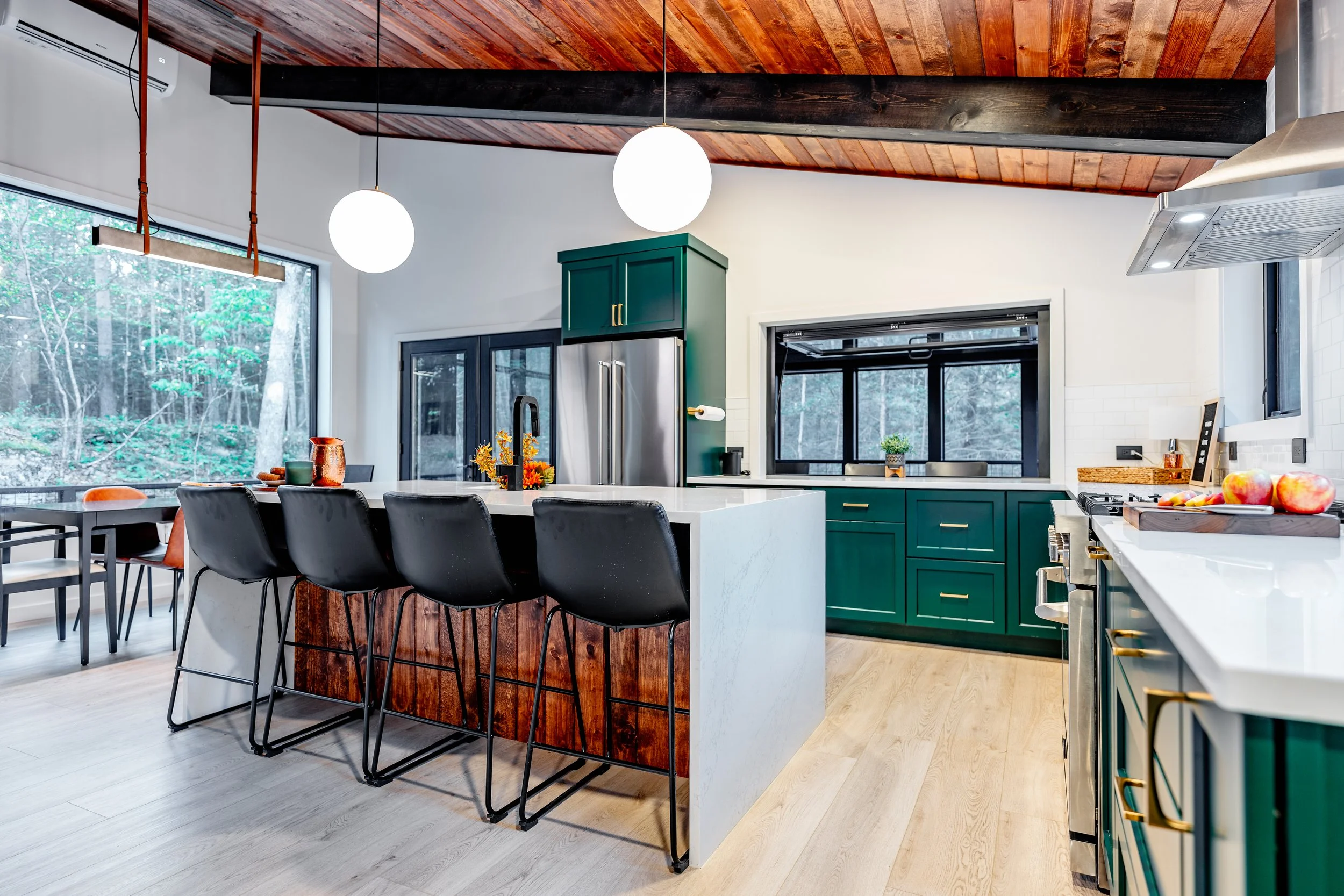
Viatera Lumina engineered quartz countertops
We use engineered quartz in over 90% of our kitchen & bathroom projects, visit our portfolio to see these projects. As beautiful as natural stone can be, engineered quartz can be just as beautiful without all the maintenance. Some of the major advantages of engineered quartz compared to natural stone are:
Engineered quartz has various price points and can be quite cost effective (depending on the brand). Most engineered quartz has a copycat of natural stone that is very convincing and typically is less expensive than the real natural stone it is mimicking. Using a countertop material that looks like natural stone with less maintenance and less cost feels like a no brainer to us!
Engineered quartz is the strongest & most durable material on the market. It is non-porous, stain resistant & scratch resistant. However, it is important to note that it is not stain or scratch PROOF. It is typically easy to fix small chips in the countertop. All of the quartz brands we work with have a warranty, so if something does stain or scratch, it may be covered (depending on the situation). If you want to review the warranties of the different countertop brands we offer, see links below:
You do not have to seal this material. Just clean it with mild dish soap, water, and a microfiber towel, and you’re good to go. Each of our quartz brands have different cleaner recommendations for more stubborn messes. After you finalize your countertop selection, we will share that brand’s cleaner of choice & maintenance information with you. It is recommended to not let anything acidic (wine, lemon juice, etc.) sit on engineered quartz countertops overnight (or any other countertop material).
When you view a slab of a specific engineered quartz brand/color, you are only viewing it to get an understanding of the color & pattern. You do not have to pick a specific slab because all of the slabs are made to look very similar to one another. This means typically one trip to a stone yard to see one slab and you’re done!
Engineered quartz can have unique applications that some natural stone countertops cannot. Mitered edges (either waterfalls or “thick” countertops) are possible on basically all engineered quartz, but not every natural stone can do this. Since natural stone tends to be softer, chipping happens more easily, and you need a durable material that can withstand the mitered edge installation. Also, engineered quartz can do unique backsplash shapes that are not typically possible with a softer natural stone (due to the chipping mentioned before). An example of a mitered edge can be seen in the photo above and an example of a unique backsplash can be seen in the photo below.
Since engineered quartz is not as heavy as natural stone, steel bracing is not required at countertop overhangs (as long as the overhang is 12” or less). This is a cleaner look and saves on the cost of the steel bracing & the installation required for this.
Some Things to Consider About Engineered Quartz
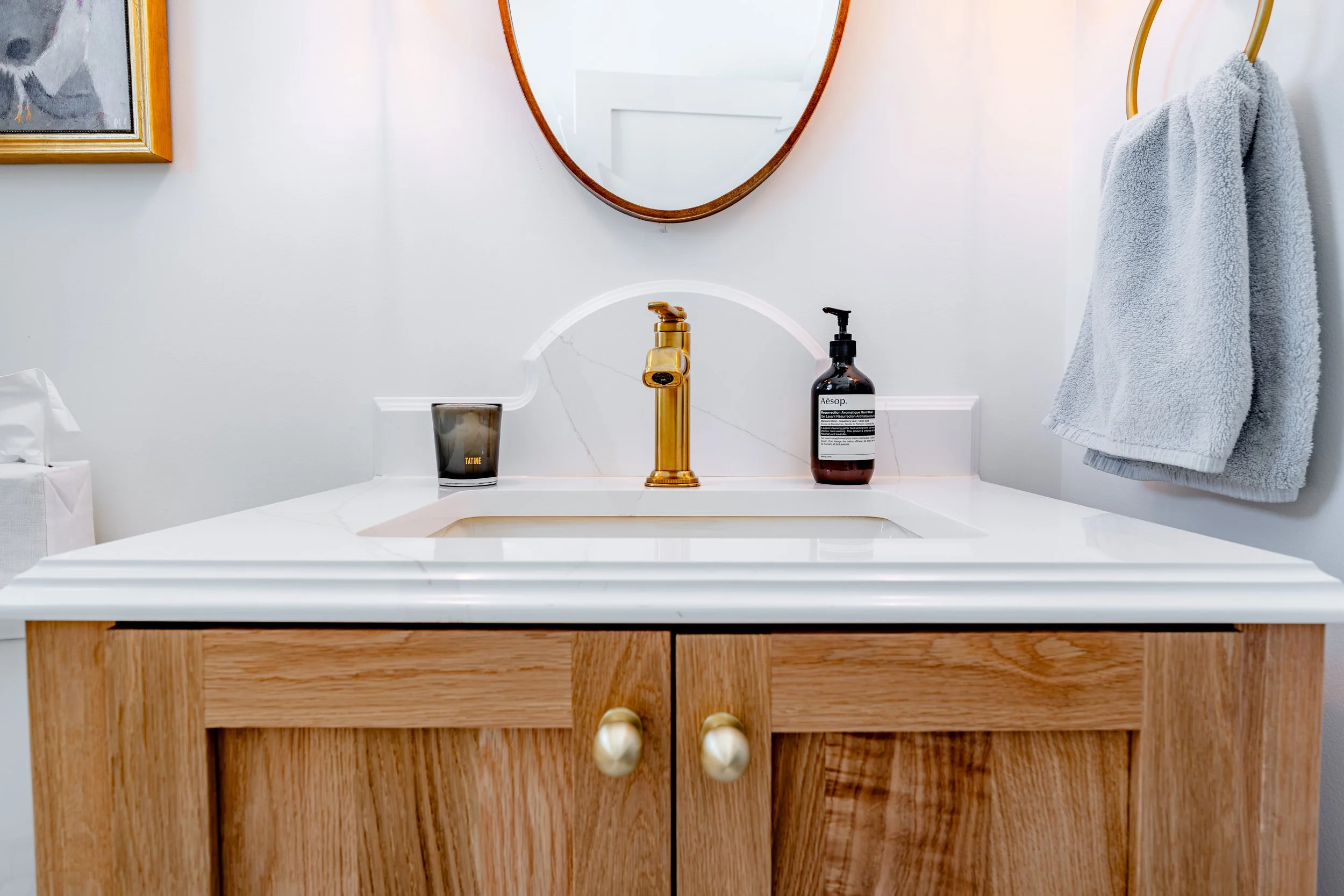
Viatera Calacatta Oro engineered quartz countertop & custom backsplash
We can’t have all those pros listed above without having some cons on the list for engineered quartz! Some disadvantages when compared to natural stone include:
Since engineered quartz slabs are made to look the same, they are not as “unique” as natural stone. If you love the idea of picking out your very own one-of-a-kind countertop, then natural stone is a better option.
Engineered quartz is a manmade material, where natural stone is just that - natural. However, engineered quartz is made of 90-95% natural quartz and other 5-10% are resins, polymers, & fillers that give it its durability so that you never have to seal it.
To Sum it All Up
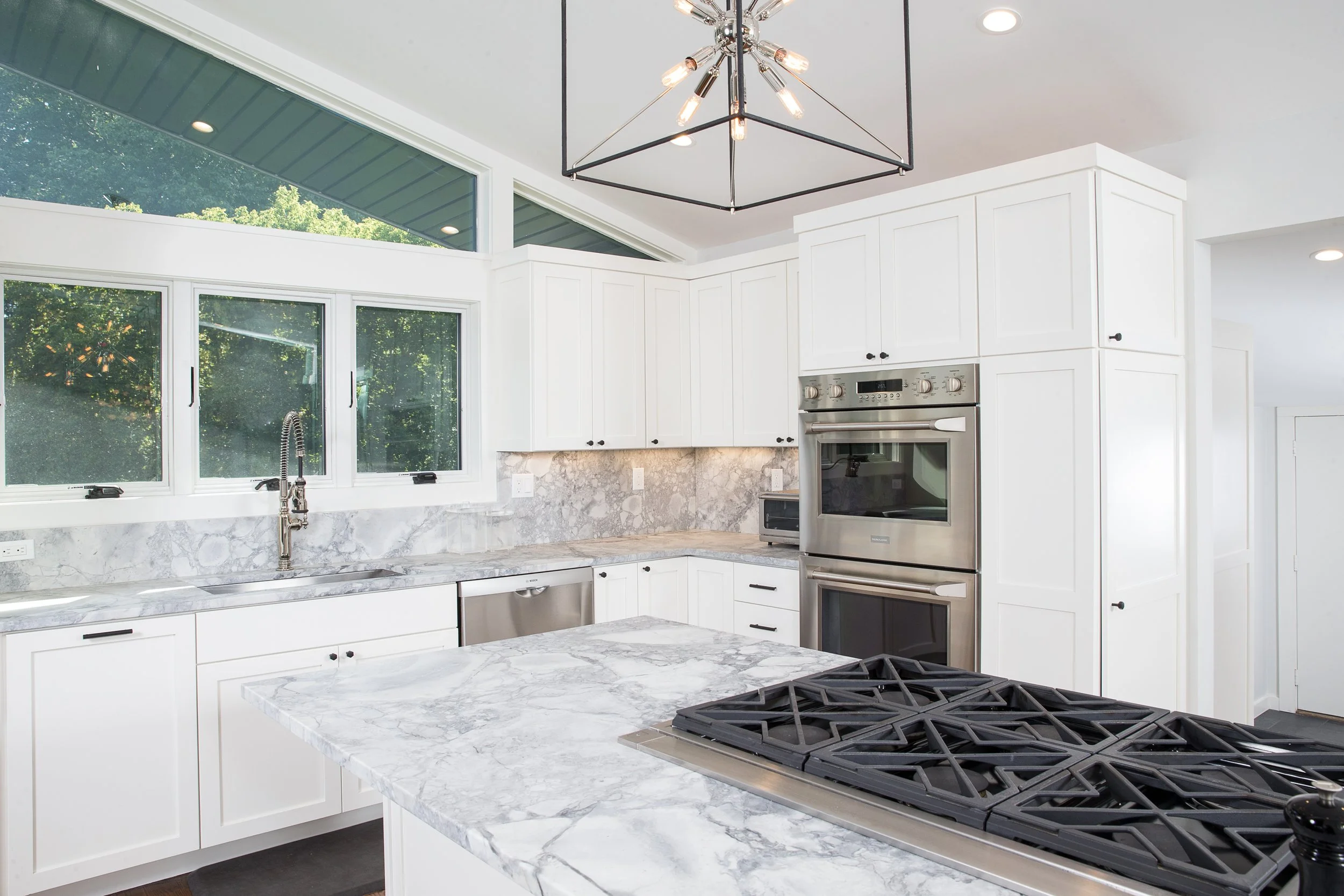
Super White Quartzite countertops & full-height backsplash
In summary, it is totally up to your preference on whether you use natural stone or engineered quartz countertops in your kitchen. If you are someone who heavily uses their kitchen, has young children at home, entertains a lot, and wants their countertop to look the same as the day it was installed for many years, then engineered quartz is your safest option. If you are someone who typically orders take out, wants a unique countertop, and is on board for the maintenance natural stone requires, then natural stone would work for you. Be sure to consult with your kitchen designer on which material is best for your project!